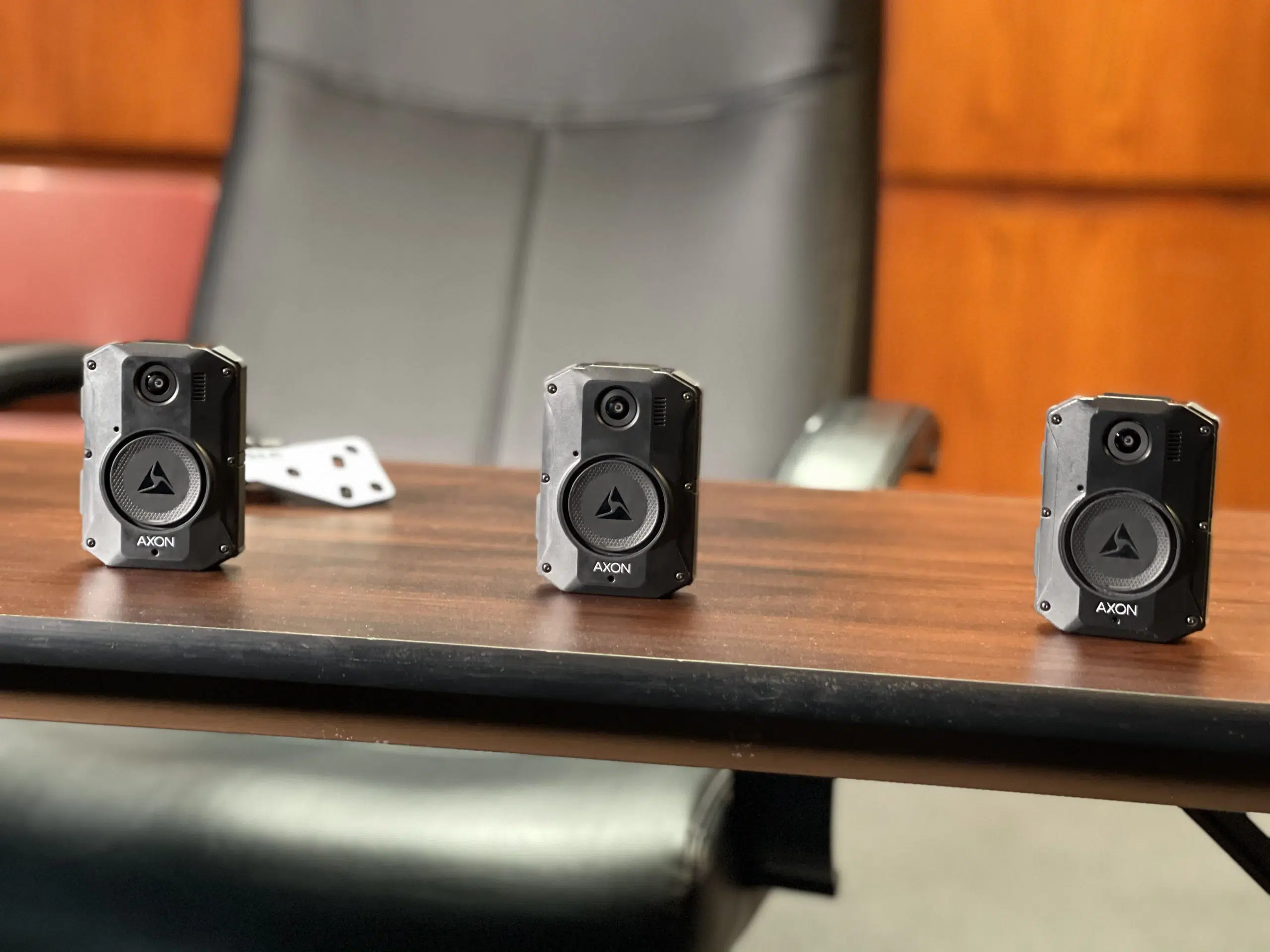
ASHWAUBENON, WI (WTAQ) – The Village of Ashwaubenon is set to begin implementing new Axon body cameras.
Within the next week or two, every officer in the village will have received proper training and begin wearing a body camera to track their interactions with the public.
“Obviously, it provides transparency…This program benefits our officers. Really, it’s a protection for officers. Instead of seeing just a short clip of what may be captured on a cellphone, it really provides the entire picture for everyone to see and analyze,” said Chief Brian Uhl. “We don’t have to rely just on the citizen or the officer’s word. We can just go back and take a look at the video, and it’s going to tell me, it’s was going to put me right there in that situation. A lot of times, more often than not, the citizen who may have thought something happened or thought they heard something, and then when we play it back for them it’s a different story.”
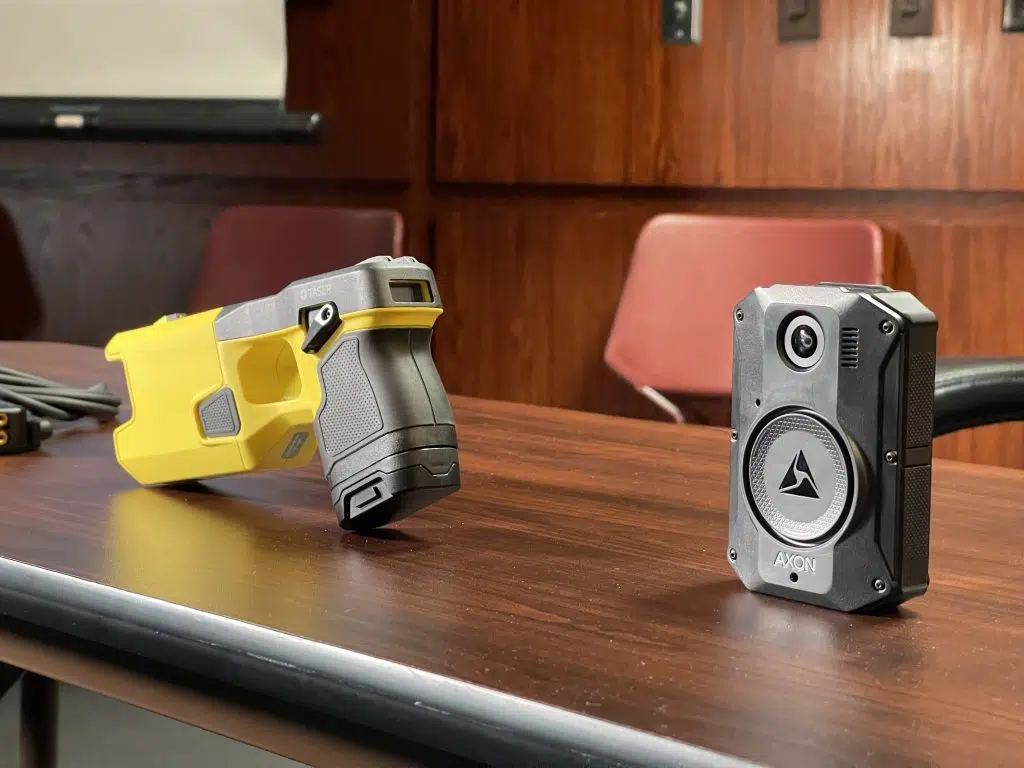
The department is receiving 51 body cameras, about a dozen in-car camera systems for squads, and another 20 tasers that officers will be able to share throughout shifts. As part of the 5-year contract with Axon, Uhl says they’ll get new and upgraded gear every 18 months. The contract also comes with unlimited storage for departments to save evidence and even share it with other local agencies and the district attorney.
 That contract is worth about $500,000. Nearly $200,000 of that is being covered by the Green Bay Packers, with $116k in direct support and $82,919 in value realized by Axon through the partnership. Without that help, village officials say it likely would’ve been several years before they could have implemented the system.
“Back in 2016 there were some trial on on those as well and there was officers that had asked if they could actually purchase this with their own money so they’re they’re really excited about this opportunity,” Uhl said.
The cameras are expected to relieve a little stress and distraction for officers who are responding to incidents that require their full attention.
“When officers are under stress they’re not necessarily thinking about turning on their cameras so with this system and the automated features it really helps officers out they can just deal with whatever critical situation is they’re dealing with,” Uhl said.
Axon had a representative in town to conduct training with officers on Friday. He explained that there is a signal sidearm device attached to the holsters, which triggers the record button when an officer pulls either their gun or taser.
“[It works] off of a bluetooth signal. In this case, we can expect the behavior of the signal to cover about a 30 foot radius,” Axon Services Professional, Russell Scarborough told WTAQ News. “They turn it on and the safety comes off, a signal is going to go out from that handle looking for any cameras that need to be recording in that 30 foot radius…When an officer goes to do a traffic stop and they hit the light bars to initiate that stop, they wouldn’t have to necessarily worry about the camera. It’ll record the incident for them.”
For example, any officer in the vicinity from any agency using Axon would have their camera turned on in the instance of an officer-involved shooting. That means there would likely be a handful of different angles and perspectives to analyze the situation from, even if there was a mix of Ashwaubenon and Green Bay Police at a scene. Even in non-lethal situations, that can be helpful for the future.
“We can learn by reviewing these videos. Any type of incident that we have, you can take a look at that and we can use it as a tool to help educate the rest of our officers on what maybe we should have done better or could have done better,” Uhl said.
Uhl also believes the cameras will help them connect better with the public, especially during times where police-community relations can seem a bit strained.
“I think what this will do is validate what we’re doing out there is really the correct thing, and [show] that what you’re seeing in the media as far as those really isolated incidents are just that, they’re extremely isolated incidents,” Uhl said. “And the majority of us are doing what we should be doing, doing the right thing for the public, day in day out, contact after contact.”


